

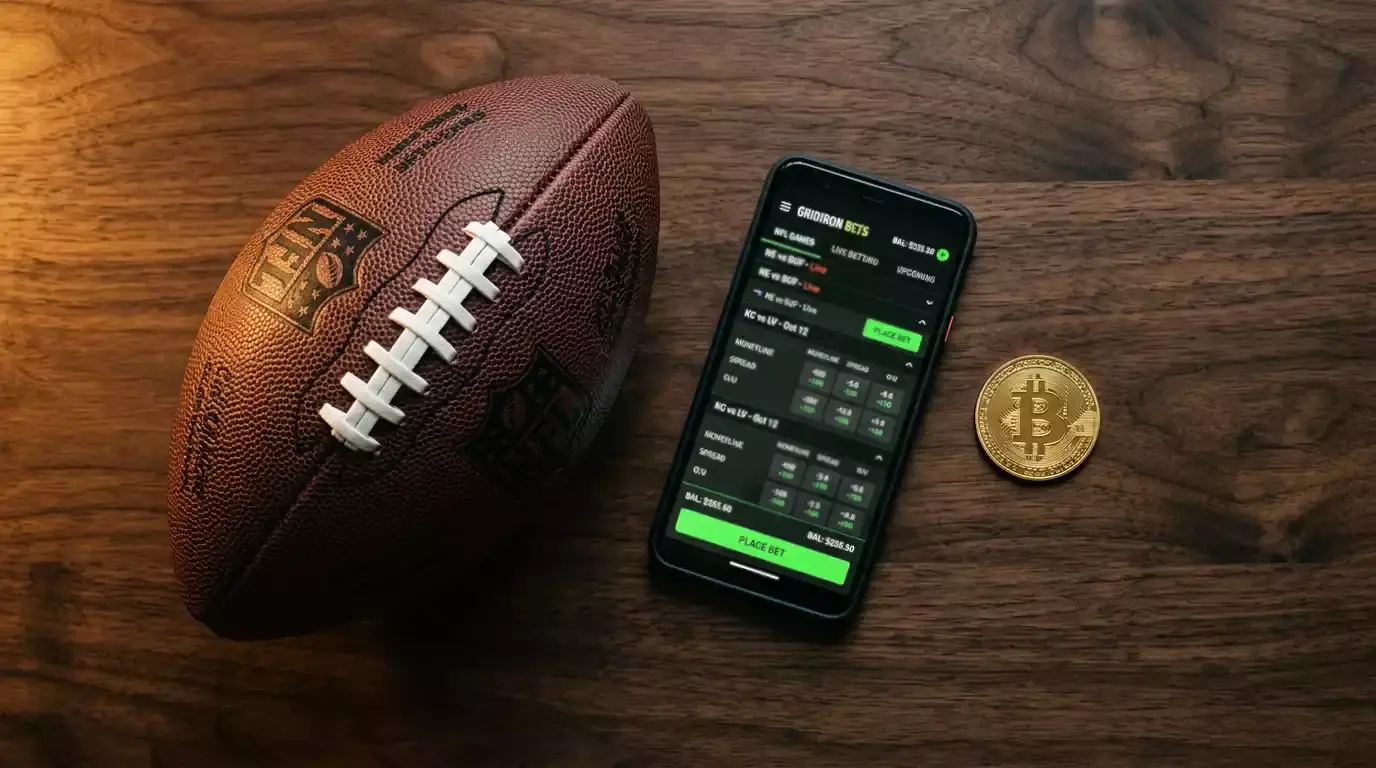
Standard vs Crypto NFL Sportsbook Features
I placed my first crypto NFL wager in 2017, back when finding a sportsbook that accepted Bitcoin for an NFL spread bet felt like tracking down a speakeasy. Nine years later, the landscape has shifted so dramatically that the real challenge is not finding a crypto sportsbook — it is telling the reliable ones apart from the noise. And for UK punters, that distinction matters more than anywhere else.
A crypto NFL sportsbook operates on a fundamentally different financial architecture than the Bet365s and Betfreds of the world. When you deposit GBP at a UKGC-licensed bookmaker, your money passes through regulated payment processors, sits in ring-fenced accounts, and is governed by a framework that has been refined since the Gambling Act 2005. A crypto sportsbook replaces that entire chain. Your deposit travels from your wallet to the operator’s blockchain address — no bank intermediary, no card network, no SEPA clearing house. That is the source of both the appeal and the risk.
The crypto gambling sector generated $81.4 billion in global revenue in 2024, a fivefold increase from just two years earlier. NFL betting sits at the centre of this growth — roughly 35% of all wagers placed on crypto sportsbooks in the US target NFL markets, and the appetite among British bettors has followed the same trajectory. With 3.7 million NFL fans now in the UK and the sport’s search volume climbing year on year, crypto sportsbooks have built NFL-specific offerings that many traditional UK bookmakers still have not matched.
The differences go deeper than payment rails. Crypto sportsbooks typically operate under offshore licences rather than UKGC oversight, which means higher betting limits, fewer restrictions on market types, and faster payouts — but also weaker consumer protections. Understanding exactly what you are getting when you sign up to one of these platforms is the first step toward using them intelligently rather than recklessly. That is what this breakdown covers: the mechanics, the licensing, the features, and the warning signs — without ranking operators or pretending one size fits all.
When evaluating these platforms, prioritizing the fastest crypto payout NFL sportsbooks ensures you get your winnings without unnecessary delays.
Licensing Tiers: Curacao, MGA, and the UKGC Gap
The first question I ask about any crypto sportsbook is not “what coins do they accept?” — it is “who regulates them, and what does that regulation actually enforce?” The answer reveals more about your exposure as a bettor than any promotional banner ever will.
Three licensing tiers dominate the crypto NFL sportsbook landscape, and they are not interchangeable. At the top sits the UK Gambling Commission, which currently does not permit licensed operators to accept cryptocurrency deposits. The British gambling industry generated GGY of £16.8 billion in the year to March 2025, with online gambling contributing £7.8 billion of that total — all processed through traditional fiat payment methods. If a sportsbook holds a UKGC licence, it cannot offer you a Bitcoin deposit option. Full stop.
Below the UKGC sits the Malta Gaming Authority. MGA-licensed operators must segregate player funds, submit to regular audits, maintain minimum capital reserves, and provide a formal dispute resolution mechanism. A handful of crypto-friendly sportsbooks hold MGA licences, though most convert your crypto deposit to fiat internally — meaning you deposit in Bitcoin but bet in euros. This hybrid model offers stronger protections than a pure offshore setup, but it strips away some of the speed and privacy advantages that drew you to crypto in the first place.
Then there is Curacao. The vast majority of crypto NFL sportsbooks operate under a Curacao eGaming licence — or, since the 2023 regulatory overhaul, a licence from the Curacao Gaming Control Board. The old Curacao framework was notoriously light-touch: a single master licence could be sub-licensed to dozens of operators with minimal individual oversight. The new framework introduced stricter AML requirements and individual licensing, but enforcement remains inconsistent. A Curacao licence tells you the operator passed a basic compliance check. It does not tell you that your funds are segregated, that the platform has been audited recently, or that you have meaningful recourse if something goes wrong.
The gap between these tiers has real consequences. The UK’s illegal gambling market now accounts for 9% of the £8.2 billion online betting sector — a dramatic rise from 2% in 2022. The UKGC issued 741 cessation orders against unlicensed operators and secured removal of over 266,000 URLs from search engines in the 2025-2026 enforcement period. Understanding where a platform sits within this licensing hierarchy is not an academic exercise — it is the single most important variable in your risk assessment. For a deeper dive into how these frameworks compare in practice, the Curacao vs MGA licensing breakdown covers the specific player protections each tier does and does not provide.
Platform Features That Matter for NFL Betting
After nine seasons of moving between crypto platforms for NFL wagering, I have developed a checklist of features that separate a sportsbook built for serious football bettors from one that simply bolted an NFL tab onto a casino site. The difference becomes obvious the moment you try to build a same-game parlay on a Thursday night kickoff.
Market depth is the first divider. A platform worth your time will list full pregame markets for every regular-season and postseason game — moneyline, spread, totals, first-half lines, quarter lines, and team totals at minimum. Player prop coverage should extend beyond the quarterback to include receiving yards, rushing attempts, anytime touchdown scorers, and defensive stats. If a sportsbook only offers moneyline, spread, and over/under for an NFL game, it is not built for the sport — it is treating American football as filler alongside its casino product.
Live betting infrastructure matters enormously for NFL. The sport’s stop-start rhythm creates natural betting windows between plays, and a platform’s ability to keep markets open with tight latency during those windows determines whether in-play wagering is viable or frustrating. I have used platforms where the live spread lagged the broadcast by a full play — functionally useless for anyone watching the game.
Cash-out functionality is another differentiator. Some crypto sportsbooks offer partial cash-out on NFL futures and pregame bets; others lock you in until settlement. For a season-long Super Bowl future placed in September, the ability to take profit mid-season after your pick’s bye week run is not a luxury — it is a bankroll management tool.
Stake.com processes roughly $10 billion in monthly wagers and attracts 127 million visits per month, which gives it the liquidity to sustain deep NFL markets throughout the season. But liquidity is not evenly distributed across the crypto sportsbook ecosystem. Smaller platforms may offer competitive odds on marquee Sunday afternoon games but thin out their markets for Thursday Night Football, London fixtures, or early-season matchups between lower-profile teams. Before committing your bankroll, check the platform’s NFL coverage during Week 2 — not just Super Bowl week. The depth you see on a quiet September Thursday tells you more than the depth you see on Championship Sunday.
Interface usability sounds mundane until you are trying to place a live bet during a two-minute drill. Bet slip responsiveness, odds refresh speed, and the number of clicks between selecting a market and confirming a wager all compound over a season. I track my own bet-placement latency as part of my workflow, and the variance between platforms is stark — some confirm in under two seconds, others take five or more during peak NFL traffic.
Deposit and Withdrawal Mechanics at Crypto Sportsbooks
The mechanics of moving crypto into and out of an NFL sportsbook are straightforward in theory and occasionally treacherous in practice. I have lost more time to network selection errors and minimum withdrawal thresholds than I care to admit — and every one of those mistakes was avoidable with basic knowledge of how these systems work.
Depositing starts with a wallet address. You log in, navigate to the cashier or deposit page, select your cryptocurrency, and the platform generates a unique deposit address (and sometimes a memo or tag, depending on the chain). You send funds from your personal wallet to that address. Once the blockchain confirms the transaction — typically one to three confirmations for Bitcoin, which takes roughly ten to thirty minutes depending on network congestion — the funds appear in your sportsbook balance. Ethereum deposits tend to clear faster, often within a few minutes, though gas fees vary wildly. Litecoin and Tron-based stablecoins (USDT on TRC-20) are the speed champions, usually confirming in under two minutes with negligible fees.
Crypto betting volumes reached $26 billion in the first quarter of 2025 alone, nearly doubling year on year, and that volume growth has pushed sportsbooks to expand their supported networks. Where Bitcoin-only was standard five years ago, most established platforms now accept BTC, ETH, LTC, USDT, USDC, and often a handful of altcoins. The network you choose for the same coin can dramatically affect your experience — sending USDT on Ethereum’s ERC-20 network might cost you $5-15 in gas, while the same amount on Tron’s TRC-20 network costs fractions of a penny.
Withdrawals follow the reverse path but introduce an additional variable: processing time. Some platforms process crypto withdrawals automatically and near-instantly. Others impose a manual review period — sometimes listed as “up to 24 hours” but in practice often faster. The review exists partly for security (to prevent unauthorised withdrawals from compromised accounts) and partly because some operators batch outgoing transactions to save on network fees. When you are withdrawing NFL winnings on a Sunday night, the difference between an instant payout and a Monday-morning manual review is the difference between having funds available for the next slate and waiting.
Minimum deposit and withdrawal thresholds vary, but most crypto sportsbooks set minimums between $10 and $20 equivalent. Maximum withdrawal limits are where things get interesting. UKGC-licensed fiat bookmakers must process verified withdrawals without unreasonable delay. Offshore crypto sportsbooks set their own rules — some cap daily withdrawals at $10,000 or the BTC equivalent, others at $50,000 or more. If you land a large NFL futures payout, understanding the platform’s withdrawal ceiling before you place the bet saves you from an unpleasant surprise when you try to cash out.
One mechanical detail that catches newcomers: most crypto sportsbooks convert your deposit to an internal currency (USD, EUR, or a platform-specific unit) at the moment of deposit. Your balance is denominated in that currency, not in the cryptocurrency you deposited. When you withdraw, the platform converts back at the prevailing rate. This means your withdrawal amount in BTC or ETH will differ from your deposit amount even if your betting balance has not changed — because the crypto price moved in between. A few platforms offer native crypto balances where you hold and bet in BTC directly, but they are the minority.
Compare odds and read detailed reviews on the premier crypto sports betting hub for NFL fans.
NFL Odds Coverage and Market Depth
Deposit mechanics get you onto the platform. What you find when you get there — the actual NFL odds coverage — determines whether it is worth staying. I line-shop across four crypto sportsbooks every NFL week, and the variance in market depth is stark enough to affect my bottom line.
Legal NFL wagers hit $30 billion during the 2025 season — an 8.5% jump from the revised $27.5 billion estimate for the prior year. That volume creates enormous liquidity in primary markets (spread, moneyline, totals), which flows downstream to crypto sportsbooks through odds feeds and risk management partnerships. Most established crypto platforms price their mainline NFL odds competitively because they source from the same data streams as regulated US sportsbooks. The edge, when it exists, appears in secondary and derivative markets — player props, game props, and draft-night specials — where pricing models are less refined and information asymmetry is greater.
A well-stocked crypto platform might list 200+ individual markets for a primetime NFL game. Defensive player props, kicking props, drive-result markets, and same-game parlay builders extend the menu far beyond the standard moneyline-spread-totals trifecta. UK-licensed bookmakers typically cover American football with a narrower selection, partly because the UKGC’s compliance framework adds cost to each new market type. That depth gap is the primary reason serious NFL bettors migrate to crypto platforms — not the payment method, but the betting menu.
NFL Draft betting is a category that barely exists at UK bookmakers. Each April, crypto sportsbooks build out 50+ draft-night markets: first overall pick, position of first quarterback selected, over/under draft positions for individual prospects, and team-specific selections. The information flow from mock drafts, combine workouts, and insider reporting creates a market that rewards obsessive preparation — and the odds move substantially in the two weeks before draft night.
The Crypto Gambling Foundation emphasises that a legitimate crypto sportsbook should demonstrate modern security standards and prove it can settle large payouts. Market depth serves as a proxy indicator: a platform pricing 150+ markets per NFL game is investing in odds compilation, risk management, and infrastructure. A platform offering fifteen markets per game is running a leaner operation — not necessarily unreliable, but revealing in its resource allocation.
One practical note for UK bettors: most crypto sportsbooks default to American odds format (-110, +150), reflecting the US-centric NFL betting audience. British punters accustomed to decimal (1.91, 2.50) or fractional (10/11, 6/4) formats can toggle in account settings, but the default display can slow your line-shopping workflow. NFL betting accounts for 35% of crypto sportsbook wagers, and that concentration explains why American odds persist as the default — even as the UK user base grows.
Red Flags: How to Spot an Unreliable Crypto Sportsbook
In 2021, I deposited 0.15 BTC at a crypto sportsbook that had been operating for less than six months. The NFL odds looked competitive, the interface was slick, and the welcome bonus was generous. Two weeks later, the site was offline. No withdrawal, no support ticket response, no recourse. That experience crystallised my approach to red flag detection — and every lesson I learned cost real money.
The most reliable red flag is an unverifiable licence. If a sportsbook claims to be “licensed and regulated” but does not display a licence number, a link to the regulator’s public registry, or the name of the licensing jurisdiction, treat the claim as fiction until proven otherwise. Curacao-licensed operators should display their licence number prominently, and you should be able to cross-reference it on the Curacao Gaming Control Board’s website. If the number does not check out, walk away.
Withdrawal delays that exceed the platform’s stated processing time are another critical signal. A sportsbook that promises 24-hour crypto withdrawals but routinely takes 72 hours is either facing liquidity issues or deliberately slowing payouts. I track my own withdrawal times across platforms, and any consistent deviation from the stated timeframe triggers an immediate reduction in my exposure to that site.
Unrealistic bonus terms often mask predatory economics. A “200% deposit match up to 5 BTC” sounds extraordinary until you read the wagering requirements — 40x rollover on the bonus amount means you need to wager 10 BTC in qualifying bets before you can withdraw a single satoshi of that bonus. Some platforms attach the rollover to the deposit plus the bonus combined, doubling your obligation. Others restrict bonus play to casino games, excluding NFL bets entirely. The fine print tells the real story.
Poor communication channels are a subtler warning. A crypto sportsbook without live chat, with email-only support, or with support agents who cannot answer specific questions about NFL market settlement rules is not investing in customer service. When a disputed bet settlement or a stuck withdrawal occurs — and over a long enough timeline, it will — the quality of support becomes the only thing standing between you and a loss.
The UKGC’s enforcement activity provides useful context here. The regulator secured removal of over 266,000 URLs belonging to unlicensed operators in the 2025-2026 period and received an additional £26 million in Treasury funding specifically to combat illegal gambling. That enforcement pressure means the lowest-quality operators are under active pursuit, but it also means new sites pop up to replace the ones that get shut down. A crypto sportsbook that has been operating consistently for three or more years, with a visible track record and an active user community, presents a fundamentally different risk profile than one that launched last month with a flashy landing page and no history.
Trust is earned over seasons, not sign-ups. Any platform can look professional on day one. The question is whether it still looks professional — and still processes your withdrawals — on day three hundred.
