

Wallet Impact on Betting Speed and Security
I learned the hard way that wallet choice isn’t a technicality — it’s a decision that directly affects whether you can get a bet down in time. Season opener 2023: I had funds on a hardware wallet, needed to deposit quickly for a player prop that was about to close, and spent fifteen frustrating minutes looking for the USB cable, plugging in the device, confirming the transaction physically, and watching the clock tick. The bet closed before my deposit cleared. That experience reshaped how I think about wallets for active NFL betting versus long-term crypto storage.
The active blockchain gaming population has grown to 102 million users, up 72% year on year, and this expanding user base has pushed wallet developers to build products that balance security with the speed that bettors need. Mobile betting accounts for approximately 80% of crypto gambling activity in 2026, which means your wallet choice needs to work seamlessly on a phone. The three main categories — hot wallets, cold wallets, and custodial solutions — each serve a different purpose, and the smartest approach for an NFL bettor is to use more than one.
Hot Wallets vs Cold Wallets for Betting
A hot wallet is a software application on your phone or computer that’s connected to the internet and ready to transact at any moment. You open the app, paste a deposit address, hit send, and the transaction broadcasts immediately. For NFL betting, where timing can matter — markets close at kickoff, odds shift as injury news drops, live betting windows are measured in seconds — hot wallets are the only practical option for your active betting funds.
The trade-off is security. Because a hot wallet is always online, it’s vulnerable to malware, phishing attacks, and device compromise in ways that offline storage isn’t. I mitigate this by keeping only my active betting bankroll in a hot wallet — enough for a week or two of NFL wagers, never my entire crypto balance. If the wallet were somehow compromised, I’d lose a limited amount rather than everything.
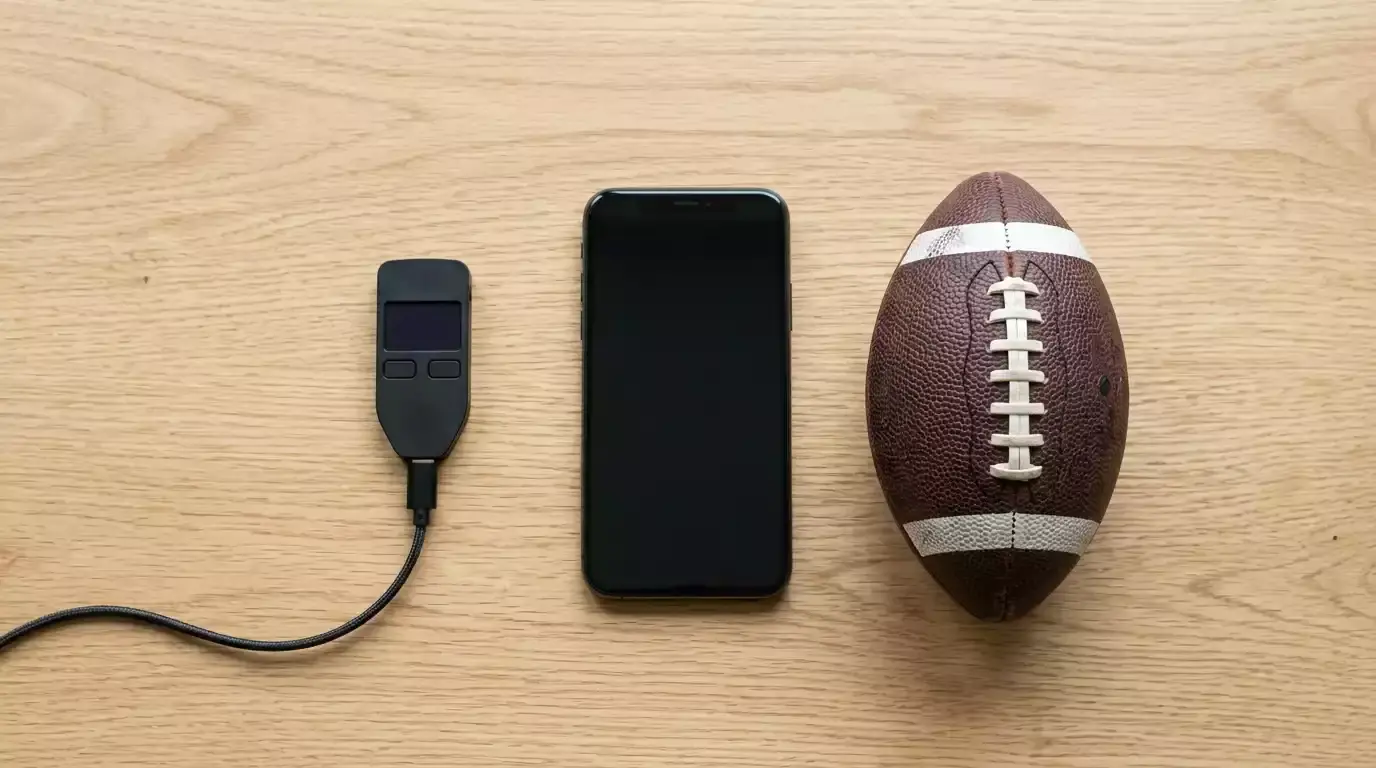
Cold wallets — hardware devices like dedicated USB dongles that store your private keys offline — offer dramatically better security. Your crypto can’t be stolen by malware because the signing keys never touch the internet. But that security comes at the cost of speed and convenience. Every transaction requires physical interaction with the device: plug it in, confirm on the hardware screen, wait for the signed transaction to broadcast. For season-long futures or large deposits you’re planning in advance, this extra friction is worthwhile. For in-play betting during a Thursday night game, it’s a dealbreaker.
My system, refined over several NFL seasons: I keep one cold wallet as a vault for my seasonal bankroll and a hot wallet as my operational account. Every Sunday morning before the early kickoffs, I transfer that week’s betting budget from cold to hot storage. The cold wallet stays disconnected the rest of the week. This setup gives me the speed of a hot wallet during active betting hours and the security of cold storage for funds I’m not actively using.
The cost factor is worth mentioning. Hot wallets are free — they’re apps you download. Cold wallets cost between 50 and 150 pounds for a reputable device. If your total NFL betting bankroll across the season is under a few hundred pounds, a cold wallet is probably overkill. If you’re working with a more substantial bankroll, the hardware device pays for itself in peace of mind on the first night you read about another exchange hack in the news.
Custodial vs Self-Custody: Who Controls Your Funds
This distinction cuts across both hot and cold wallets. With a self-custody wallet — whether hot or cold — you hold the private keys. Nobody can freeze your funds, nobody can deny a withdrawal, and nobody can prevent you from sending crypto to any address you choose. The flip side is absolute responsibility: lose your recovery phrase and your funds are gone permanently, with no customer support line to call.
Custodial wallets, by contrast, are managed by a third party — typically an exchange or a dedicated custody service. You log in with a username and password, and the service holds the actual private keys on your behalf. This is convenient and familiar — it works like a bank account. But it means the custodian can freeze your funds, impose withdrawal limits, or block transactions to gambling platforms.
That last point is critical for NFL bettors. Several major UK-accessible exchanges actively monitor for gambling-related transactions and will restrict accounts that deposit directly to known sportsbook addresses. Using a self-custody wallet as an intermediary between your exchange and the sportsbook solves this problem entirely. The exchange sees a transfer to a personal wallet address, not to a gambling platform, and your sportsbook deposit stays private.
There’s a middle ground that’s gained traction recently: multi-signature wallets that require two or more keys to authorise a transaction. These are primarily used by people with larger bankrolls who want the security of distributed key management without relying on a custodian. For most NFL bettors, a standard self-custody hot wallet strikes the right balance between convenience and control. The key principle is simple: if you can’t send your crypto wherever you want, whenever you want, without anyone’s permission, you don’t fully own it. For betting purposes, that level of control isn’t just philosophical — it’s practical.
