

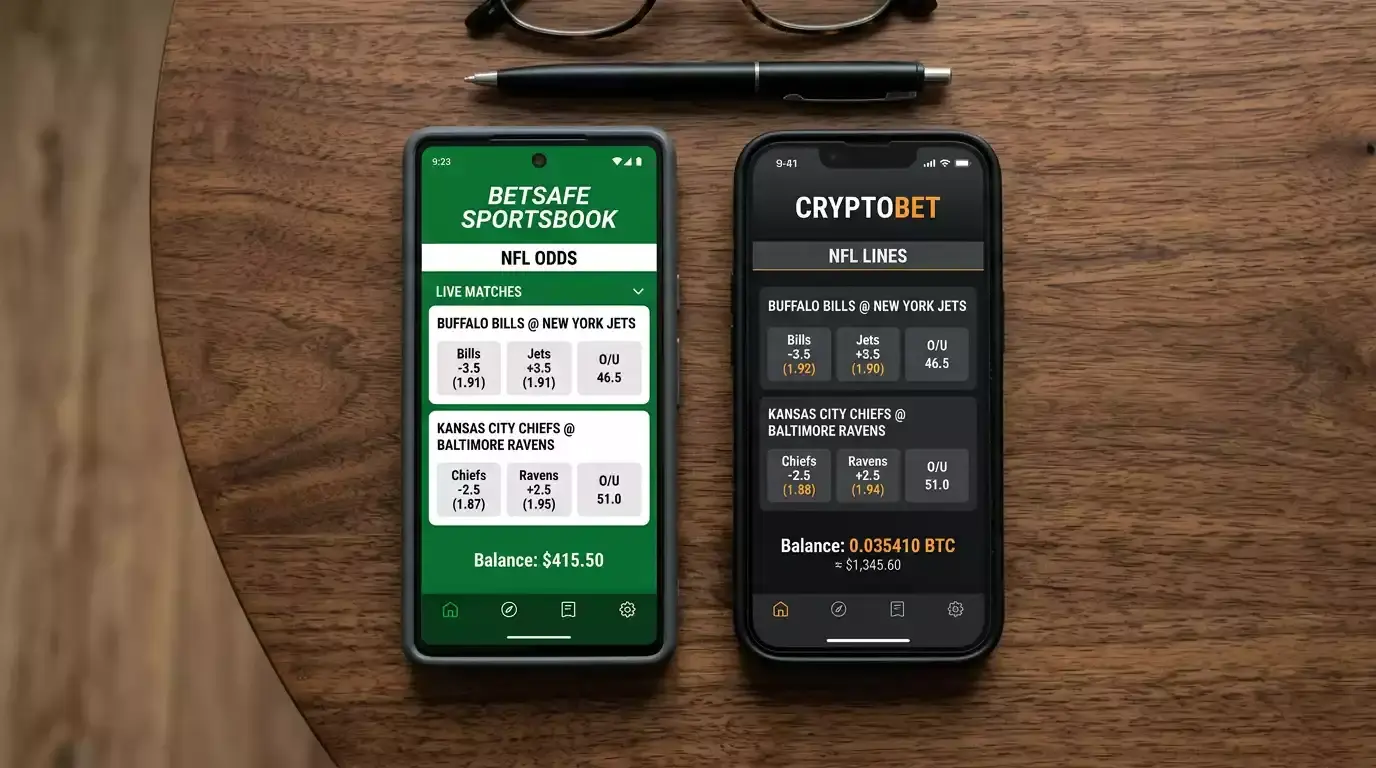
System Trade-Offs in Fiat and Crypto Wagering
After nine years of betting on the NFL through both systems, I can say with certainty that neither crypto nor fiat is universally superior. Each involves trade-offs, and the right choice depends on what you value most — speed, consumer protection, market depth, or cost efficiency. The mistake most people make is treating this as a tribal decision rather than a practical one.
The UK’s gambling industry generated $16.8 billion in gross gambling yield in the year to March 2025, with online gambling contributing $7.8 billion of that total. Crypto gambling globally hit $81.4 billion in revenue in 2024. These are two massive ecosystems operating in parallel, and UK NFL bettors sit at the intersection, able to participate in either or both.
Deposit Speed and Fee Comparison
On speed, crypto wins outright. A Litecoin deposit clears in under five minutes. A USDT transfer on TRC-20 takes under a minute. Even Bitcoin, the slowest major crypto option, typically confirms within 10-30 minutes. Bank transfers to UKGC-licensed sportsbooks take one to three business days via standard processing, or minutes via Faster Payments — but debit card deposits are instant at most UK bookmakers, which narrows the gap considerably.
Withdrawals are where the difference becomes dramatic. Crypto sportsbook withdrawals can process in minutes. UKGC-licensed bookmakers typically take one to five business days for bank transfer withdrawals, and even e-wallet cashouts take several hours to a day. If getting your winnings back quickly matters to you — and after a profitable NFL Sunday, it usually does — crypto’s withdrawal speed is its single most compelling feature.
Fees are more nuanced. Crypto transactions carry blockchain network fees that vary by coin and congestion. A Bitcoin withdrawal might cost 1-3 pounds in network fees; Litecoin costs pence. UKGC-licensed bookmakers don’t charge deposit or withdrawal fees themselves, but your bank may impose charges for gambling transactions. Crypto betting hit $26 billion in Q1 2025 alone, and the fee structure is a significant part of why — for frequent bettors, avoiding bank-imposed gambling fees over a full season adds up to meaningful savings.
There’s a hidden fee dimension too. Some UK banks now flag gambling transactions and add friction to the process — delayed processing, blocked card payments, or follow-up calls from your branch. Crypto eliminates that entirely. Your bank sees a transfer to an exchange or a personal wallet, not a gambling transaction. That privacy benefit isn’t about secrecy; it’s about avoiding unnecessary interference with legitimate activity.
Betting Limits and Market Access
This is where crypto sportsbooks have a structural advantage that surprises many UK bettors accustomed to the regulated market. UKGC-licensed bookmakers are increasingly aggressive about limiting winning accounts. If you demonstrate consistent profitability on NFL markets, most UK bookmakers will reduce your maximum stakes within weeks, sometimes to trivially small amounts. Sports betting accounts for over 56% of UK online gambling revenue, and bookmakers protect their margins by restricting the bettors who erode them.
Crypto sportsbooks generally operate with higher limits and greater tolerance for winning players. The business model is different: offshore platforms compete on volume across a global user base, and individual sharp bettors represent a smaller proportional risk. I’ve maintained accounts at crypto sportsbooks for multiple NFL seasons while betting at levels that would have been restricted at UK-licensed operators within a month.
Market access is the other dimension. UKGC-licensed bookmakers offer solid NFL coverage for mainstream markets but often lack the depth of props, derivatives, and alternative lines that crypto platforms provide. If you want to bet on a quarterback’s third-down completion percentage in a specific quarter, you’re more likely to find that market on a crypto sportsbook than on a UK-licensed platform.
Regulatory Protection: UKGC vs Offshore
And here’s where fiat wins, unambiguously. UKGC-regulated sportsbooks operate under one of the most robust consumer protection frameworks in the world. Your funds are segregated. Disputes have a formal resolution process through the regulator. Advertising standards are enforced. Responsible gambling tools — deposit limits, self-exclusion, reality checks — are mandatory. If something goes wrong, you have recourse.
Offshore crypto sportsbooks offer none of this systematically. Some individual platforms implement responsible gambling tools voluntarily, but compliance is inconsistent and unaudited. Regulatory expert Tom Elliot has noted that while crypto introduces new fraud and AML considerations, this “doesn’t automatically mean higher” risk — and in some respects, crypto’s on-chain transparency can support a “more robust control environment than fiat payments.” But that potential hasn’t yet translated into the kind of systematic consumer protection that UKGC regulation provides.
For UK NFL bettors, the practical implication is a risk-reward decision. Crypto offers speed, lower fees, higher limits, and deeper markets. Fiat offers regulatory protection, fund segregation, and a complaints process with teeth. Many experienced bettors — myself included — use both: UKGC-licensed accounts for straightforward bets where consumer protection matters most, and crypto accounts for the markets, limits, and speed that the regulated ecosystem doesn’t match. The Bitcoin NFL betting experience and the UKGC sportsbook experience serve different purposes, and treating them as complementary rather than competitive is the most practical approach.
The landscape is shifting, too. The UKGC’s recent signals about exploring crypto integration suggest that the gap between these two systems may narrow over the next few years. If licensed operators eventually accept crypto deposits under UKGC oversight, UK bettors could gain the transaction speed of crypto within the consumer protection framework of fiat. That convergence isn’t here yet, but it’s worth building your betting infrastructure with the possibility in mind.
