

Line Movement Variances in Crypto Sportsbooks
I spotted it during Week 8 of the 2025 season: a three-point swing on a Thursday Night Football spread at a crypto sportsbook while the same line at two major US platforms had barely moved a half-point. The crypto book had taken a large Bitcoin bet that shifted their exposure, and because their player pool was smaller and less diverse than a regulated US sportsbook’s, the impact on the line was amplified. That’s the core insight about line movement at crypto sportsbooks — the mechanics are the same as traditional markets, but the dynamics are different because the player base, bet limits, and risk management approach differ.
NFL betting generated approximately $30 billion in legal wagers during the 2025 season, with NFL accounting for roughly 35% of all bets at crypto sportsbook platforms. Lines move because sportsbooks adjust to balance their exposure. When more money comes in on one side of a spread, the book shifts the number to attract action on the other side. This happens at every sportsbook — fiat or crypto, licensed or offshore. But the degree and speed of movement varies with the sportsbook’s total handle, the sophistication of its customer base, and its risk tolerance.
Crypto sportsbooks tend to move lines faster and further than large regulated operators for several reasons. Their total handle per game is often lower, meaning a single large bet represents a bigger percentage of total exposure. Their customer base may include a higher proportion of sharp bettors relative to casual volume, which means their books are more exposed to informed opinion. And their risk management teams — at smaller platforms especially — may be less experienced at absorbing and distributing risk across a deep player pool.
Tracking Line Movement Across Crypto Platforms
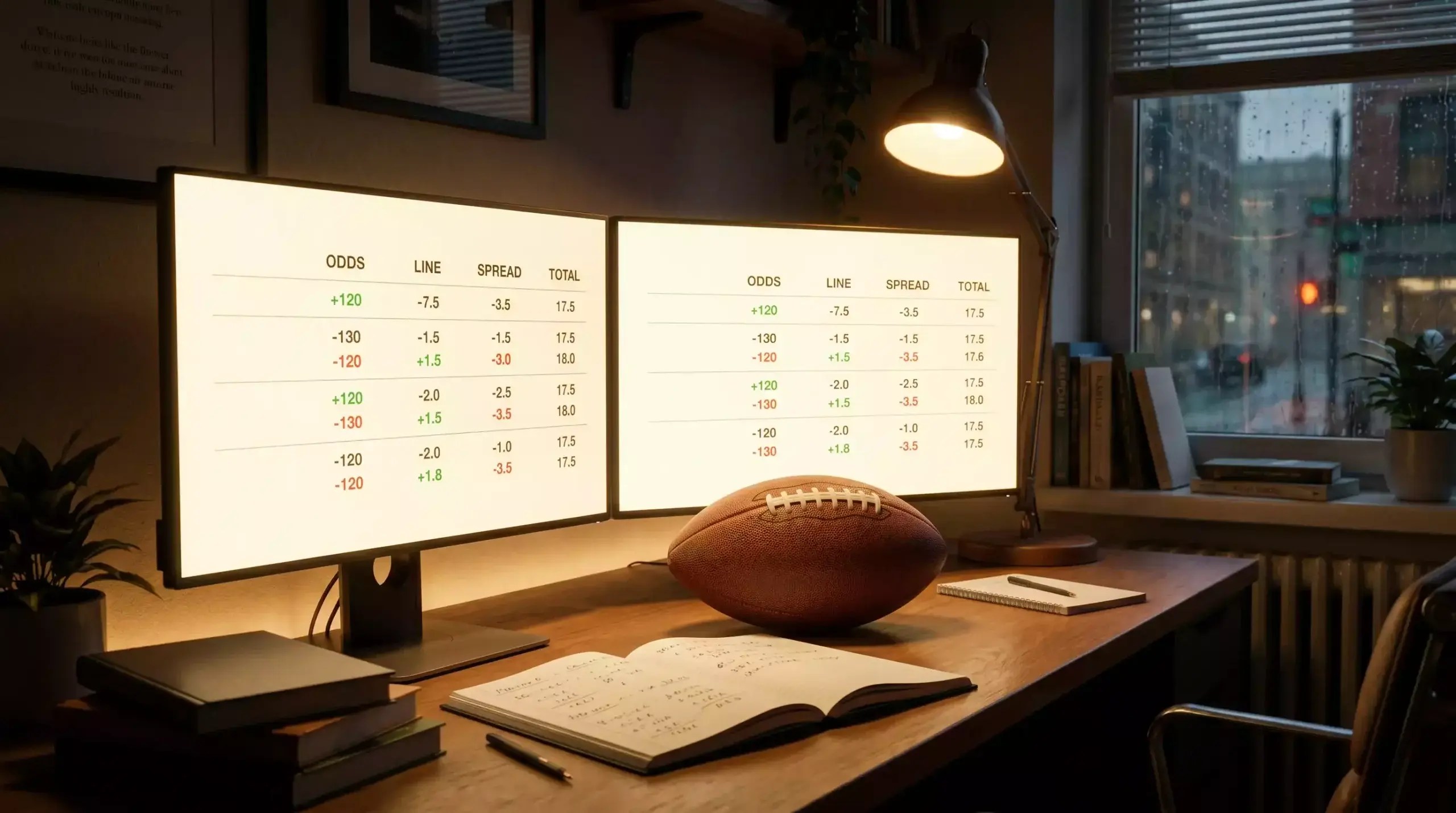
My line-tracking routine for each NFL week starts on Tuesday when the early lines are posted. I record the opening number at three crypto sportsbooks and two US-facing platforms to establish a baseline. Throughout the week, I check those lines at set intervals — Tuesday evening, Thursday morning, Saturday evening, and Sunday morning — noting any movements and correlating them with news events: injury reports, weather forecasts, and reports of large bets.
The most actionable line movements happen in two windows. The first is Tuesday through Wednesday, when opening lines interact with early sharp money. If a line at a crypto sportsbook moves a full point within 24 hours of opening while the consensus line across other platforms moves only a half-point, the crypto book has likely taken a concentrated sharp bet. That movement tells you something about where informed money is landing, even if your own analysis hasn’t reached a conclusion yet.
The second window is Sunday morning, 60-90 minutes before kickoff, when the final wave of injury news, inactive list decisions, and weather updates hit the market. This is the window I find most profitable for crypto sportsbook betting specifically, because the smaller platforms are slower to react to late-breaking information than the major regulated books. If a starting quarterback is ruled inactive 90 minutes before kickoff, the major US books adjust within seconds. A mid-tier crypto sportsbook might take 5-10 minutes to move. That lag creates a window for informed bettors.
I use a simple spreadsheet to track lines across platforms rather than relying on third-party odds comparison sites, because those sites often don’t include the smaller crypto sportsbooks where the most exploitable movements occur. Manual tracking is more labour-intensive, but the edge it identifies has been consistently positive across my last three NFL seasons.
Reverse Line Movement and Steam Moves
Reverse line movement is one of the most misunderstood concepts in NFL betting, and crypto sportsbooks make it both easier to spot and harder to interpret. The basic idea: if 70% of public bets are on Team A but the line moves toward Team A (making them less attractive), the implication is that the 30% on Team B represents sharper, larger money that outweighs the public volume. The sportsbook is adjusting to the dollars, not the ticket count.
At crypto sportsbooks, reverse line movement can be deceptive. Because the bet count is lower and individual whale bets carry more influence, what looks like reverse movement might just be one large bet from a player the sportsbook respects. That’s useful information, but it’s not the same as the broad-based sharp consensus that reverse movement signals at a major platform with tens of thousands of bets on a single game.
Steam moves — rapid, simultaneous line shifts across multiple sportsbooks — are the highest-confidence line movement signal. When a spread moves from -3 to -3.5 at five different platforms within a few minutes, a syndicate has distributed bets across the market. Crypto sportsbooks are usually late to these moves because they sit outside the main syndicate distribution networks. If you spot a steam move at regulated platforms but your crypto sportsbook still shows the old number, you have a brief window to bet the stale line before the crypto book adjusts.
That window is narrow — sometimes just minutes — and exploiting it requires monitoring multiple platforms simultaneously. I keep three browser tabs open on NFL Sundays: two regulated odds sources and one crypto sportsbook. When I see a sharp move on the regulated side, I check whether the crypto book has followed. If it hasn’t, and the move aligns with my own analysis, I bet immediately. This approach won’t work for every game, but across a full season it identifies a handful of high-confidence opportunities at favourable spread numbers that you’d miss if you only tracked one platform.
