

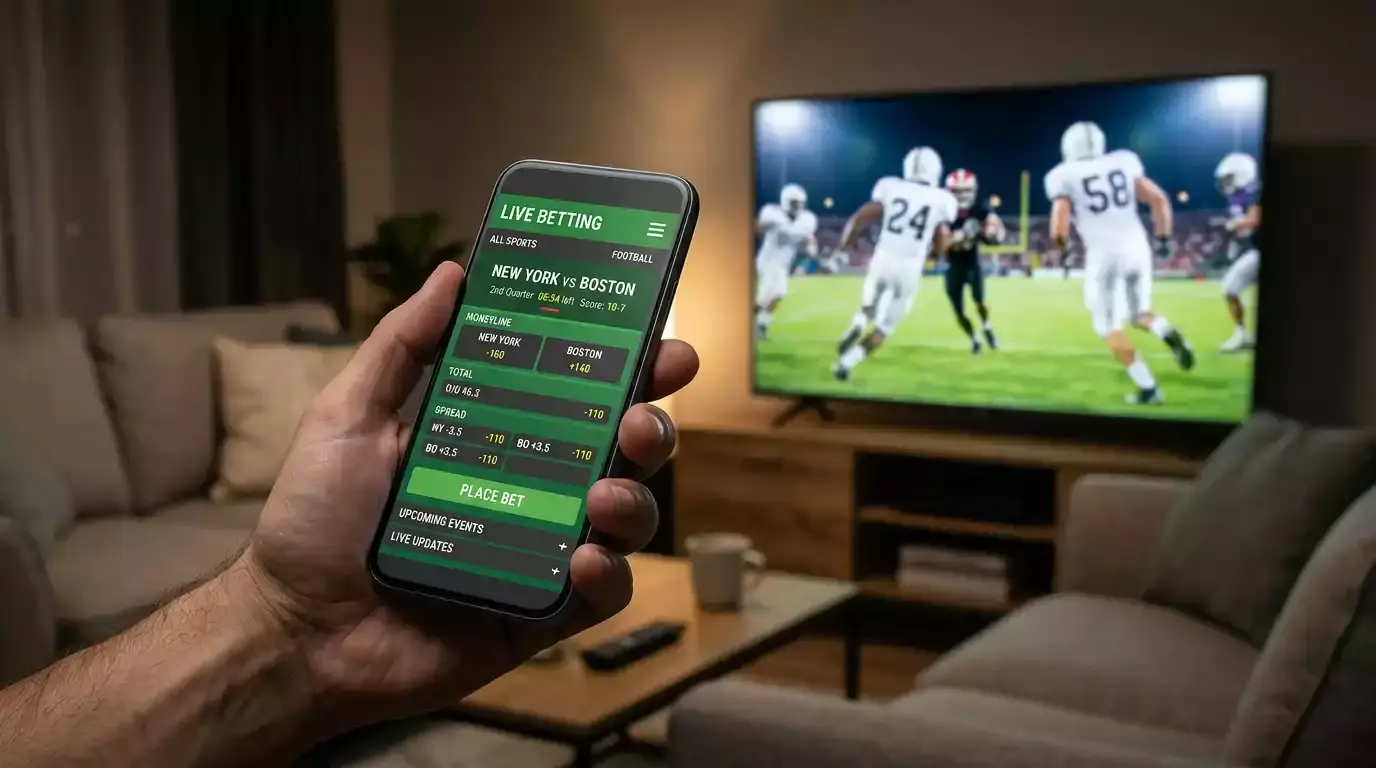
Mobile Interface Dominance in Crypto Wagering
I haven’t opened a crypto sportsbook on a desktop computer for an NFL bet in over two years. Everything happens on my phone — checking lines on the morning commute, placing bets during lunch, monitoring live odds on the sofa during Sunday Night Football. This isn’t unusual. Mobile transactions account for roughly 80% of all crypto gambling activity in 2026, and that percentage is likely higher for NFL betting specifically, because the games happen in the evening when most UK bettors are away from their desks.
The mobile experience at crypto sportsbooks has evolved from barely functional to genuinely competitive. Five years ago, the mobile versions of most crypto platforms were cramped, slow, and missing features available on desktop. Today, the leading platforms are mobile-first — designed for phone screens initially, with desktop as the secondary interface. The largest operator in the crypto space processes around $10 billion in monthly bets and attracts 127 million visits, with the vast majority coming from mobile devices. That traffic volume has driven enormous investment in mobile performance.
For UK NFL bettors, the mobile-first approach matters because of when we watch and bet on games. The NFL’s prime-time slots — Sunday evening, Monday night — coincide with the times when we’re most likely to be on our phones rather than sitting at a computer. A mobile experience that’s slow, clunky, or unreliable during these peak hours isn’t just annoying; it costs you betting opportunities.
Progressive Web Apps vs Native: What Crypto Sportsbooks Offer
You won’t find crypto sportsbooks on the App Store or Google Play. Apple and Google both have policies restricting real-money gambling apps, and offshore crypto operators don’t meet the regulatory requirements for inclusion in either marketplace. Instead, crypto sportsbooks offer two mobile access methods: progressive web apps (PWAs) and direct browser access.
A PWA is a website that can be “installed” to your phone’s home screen, where it behaves like a native app — it has its own icon, launches in a full-screen window, and can send push notifications. The installation process is simple: visit the sportsbook in your phone’s browser, tap the share/menu button, and select “Add to Home Screen.” The PWA loads faster than a regular bookmark because it caches certain resources locally, and the full-screen mode eliminates the browser toolbar, giving you more screen space for the betting interface.
Direct browser access is the fallback. Open Safari or Chrome, navigate to the sportsbook, and bet through the browser. This works on every device without installation, but it’s slightly slower, you see the browser interface taking up screen space, and you don’t get push notifications for bet settlements or odds changes. For casual bettors who check in a few times per week, browser access is fine. For anyone placing live bets during NFL games, the PWA is worth the 30 seconds of setup time.
A few platforms have started distributing APK files for Android — native app packages that you download and install directly, bypassing Google Play. These offer the smoothest experience but require enabling installation from unknown sources on your device, which carries security implications. I only install APKs from platforms I’ve used and verified for at least a full season. For a new or untested sportsbook, stick with the PWA.
Linking a Mobile Wallet for Quick Deposits
The deposit workflow on mobile is slightly different from desktop because your crypto wallet and your sportsbook are both apps on the same device. Instead of copying and pasting a deposit address between browser tabs on a computer, you’re switching between the sportsbook app and your mobile wallet app.
The smoothest mobile deposit flow works like this: the sportsbook displays a deposit address and a QR code. Your mobile wallet has a scan function. Scan the QR code, confirm the amount, and the transaction broadcasts. The entire process takes about 15 seconds once you’ve done it a few times. The QR code method is faster and more reliable than manual address copying, which is prone to errors on small phone screens.
Some wallets support deep linking — tapping the deposit address on the sportsbook’s page opens your wallet app directly with the address pre-filled. This is the most seamless flow, but it requires that both the sportsbook and the wallet support the same linking protocol. In practice, deep linking works reliably about 60-70% of the time. For the other 30-40%, QR scanning is the backup, and it’s reliable enough that I’ve never had a deposit fail because of a mobile workflow issue.
One mobile-specific consideration: battery and connectivity. Crypto transactions require your device to communicate with the blockchain network, which needs an active data connection. In areas with poor signal — underground, in stadium crowds, on rural commutes — transactions might fail or hang in a pending state. I always verify my sportsbook balance has been credited before placing a bet, because a pending deposit that eventually fails leaves you with a confirmed bet and no funds to cover it. That five-second verification step is even more important on mobile than on desktop, where network connections tend to be more stable.
